18 October 2006
Simhas Torah in Baltimore
Whereas last year I spent Simhas Torah in Washington Heights, this year, I spent it at Beth Tefiloh in Batlimore. It was an interesting shul, to be sure. Although I davened on Shabbas in "The Minyan" (the kiddush after shaharis and before mussaf was clutch), I davened in the main sanctuary on the following day, especially to help bring some dancing and spirit (ruah) to the shul, along with a fellow YCTer. Interesting was that BT is one of the few shuls that has a kosher microphone system, which makes sense for the size of the sanctuary and number of people that attend shabbas and holiday services. It was a nice time. I should also mention that the head rabbi there, Rabbi Wohlberg (who mentioned that he had read my blog), is tremendously funny - so much so that I think he's the funniest pulpit rabbi I've met so far (although you can find a number of his sermons in pdf format, his humor comes through also through his delivery, so it might be somewhat lost on some). (I also wanted to thank Chaim (whom I had mentioned previously), who, aside from being one of two former Derech guys who were at the shul for a young people's hakafos along with myself, gave me some encouragement with the blog - so thanks.)


Hol haMoed
Last week, after having been back home, I returned to my apartment in the Heights and spent the week mostly looking through various Jewish journals for articles at the YU library as well as working on looking for sleep statements in the Mishneh Torah (in addition to what I have found previously) (and, yes, I have looked through the Guide) for my planned upcoming paper on Maimonides' view(s) on sleep (I think it may be my submission for this year's Milin Havivin volume), as well as looking through secondary literature for sources for my planned article on sleep in the book of Proverbs.
Back in Ohio
As mentioned previously, I did, indeed, go back to Gahanna and spent the first weekend of this year's Sukkos holiday in Columbus.
It was, once again, a bit weird and interesting being back in the town in which I grew up - not least of which due to my position in life and perspectives on things being different than many there - certainly coming from being surrounded by New York City and heading back there. (Sorry for the looong sentence.) Anyways, that characterized the few days I spent taking care of errands, etc. while being at home prior to the holiday.
For the holiday, I davened at Beth Jacob and stayed at the Cantor's house, as we are peers and go back several years. One significant thing which occurred was that I had handed to the new rabbi there, Rabbi Weisz, grandson of Rabbi David Stavsky (the rabbi there for several decades (and was the officiating rabbi at my parents' wedding)), a copy of the second volume of Milin Havivin. After having told him that I had written an article on sleep for that volume (upon which one may find my major critiques of that piece), he asked me to speak upon the topic on Saturday evening between Minhah and Ma'ariv, which I obliged. Although I had expected someone to inquire regarding washing one's hands in the morning, instead someone queried me as to why hasidim often will daven and say krias shema' past the designated times as per halakhah, to which I knew not the answer (though I suppose someone will...). Anyways, I do want to thank Rabbi Weisz and the congregation for the opportunity.
It was, once again, a bit weird and interesting being back in the town in which I grew up - not least of which due to my position in life and perspectives on things being different than many there - certainly coming from being surrounded by New York City and heading back there. (Sorry for the looong sentence.) Anyways, that characterized the few days I spent taking care of errands, etc. while being at home prior to the holiday.
For the holiday, I davened at Beth Jacob and stayed at the Cantor's house, as we are peers and go back several years. One significant thing which occurred was that I had handed to the new rabbi there, Rabbi Weisz, grandson of Rabbi David Stavsky (the rabbi there for several decades (and was the officiating rabbi at my parents' wedding)), a copy of the second volume of Milin Havivin. After having told him that I had written an article on sleep for that volume (upon which one may find my major critiques of that piece), he asked me to speak upon the topic on Saturday evening between Minhah and Ma'ariv, which I obliged. Although I had expected someone to inquire regarding washing one's hands in the morning, instead someone queried me as to why hasidim often will daven and say krias shema' past the designated times as per halakhah, to which I knew not the answer (though I suppose someone will...). Anyways, I do want to thank Rabbi Weisz and the congregation for the opportunity.
03 October 2006
Days of Awe (ימים נוראים)
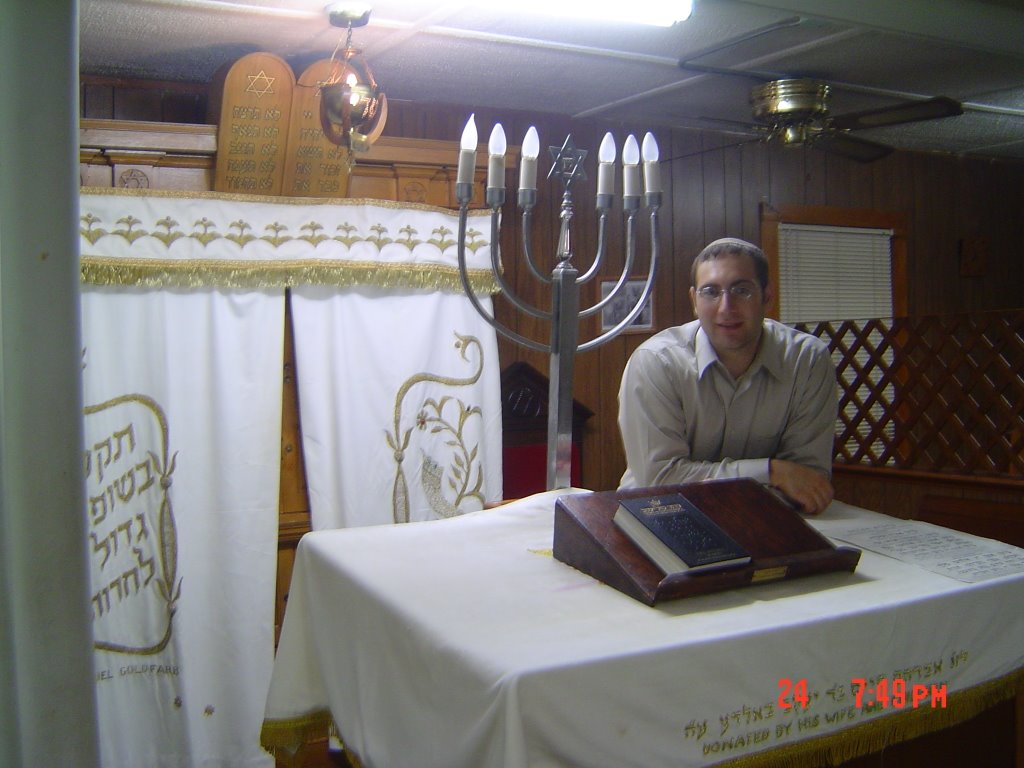 The Days of Awe (ימים נוראים) have just passed, consisting of the ten days beginning with the two days of the Jewish New Year (ראש השנה) and concluding with the one day of the Day of Atonement (יום כיפור). What comes onto my mind every year is a trepidation - one not so much deriving from fear of approaching the Divine Presence, but rather of trying to get down our Jewish practices as far as what to do in this time of year. I think that's part of what being a BT is about - just when I think I'm kind of getting the rhythm down of Jewish life, then bam, the flow gets switched up and some sort of holiday or fast comes up and I must learn all about it (versus FFBs who not only may have a sense of the actions, practices, and/or attitudes of variou
 s holidays already down, also have more of a visceral connection, which helps them orient more positively towards the holiday(s) in question). I think, if asked, my favorite time of the Jewish year would have to be the time following Sukkos up through the winter and the spring, as Hanukkah and Purim aren't too intense around which to wrap my head, up until before Pessah and then from then, it gets a little bit more difficult.
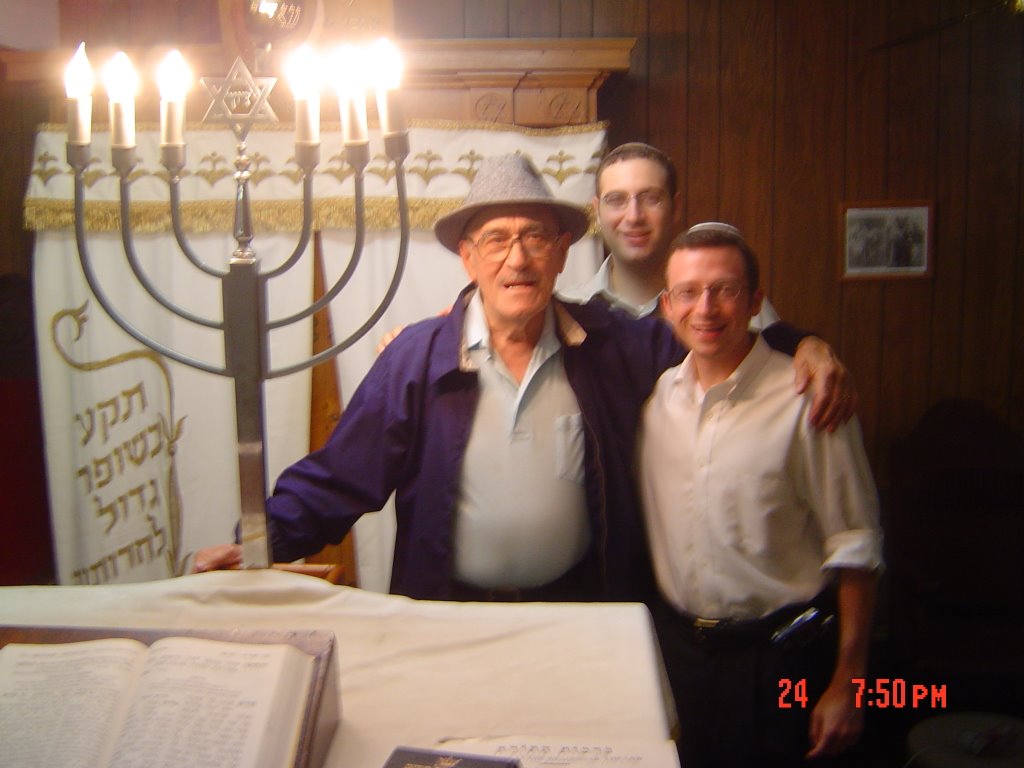
Anyways, I spent my Rosh HaShanah in Onset, MA at the only Orthodox shul in Cape Cod, Congregation Beth Israel. It is also known for being the Rav's summer shul. It was a nice, small minyan, but I'm not sure that they got enough for a minyan for Yom Kippur. Anyways, it was a nice, pleasant davenning, part of which was led by my fellow schoolmate, Yonah Berman,
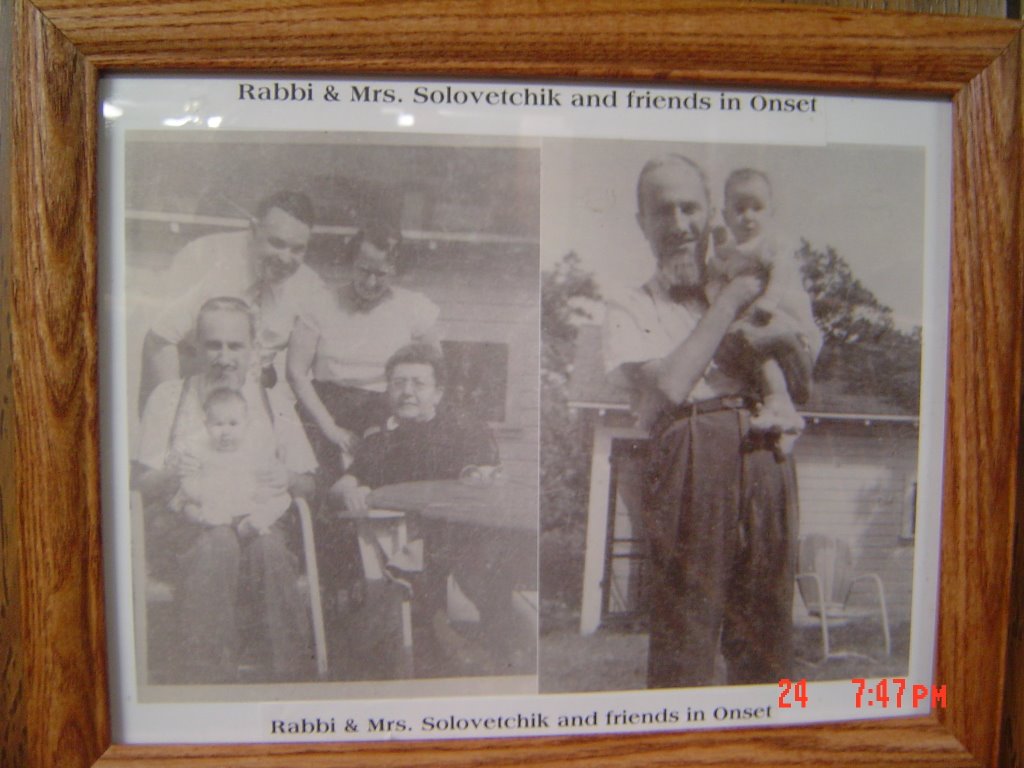 and also some of which was led beautifully by Dr. Matthew Zizmor. It was a nice town with coves of water around, which was peaceful and nice. However, I'm sure that in the summer it must be more so, however with warmer weather and more people around, but most people had already departed following Labor Day weekend, and the weather had begun to change to autumn-like weather. The weather change clearly imparting to me that summer had, indeed, come to an end.
We had school the week in between, and for Yom Kippur, I went to HIR up in Riverdale for Sunday night. Upon leaving, Rabbi Weiss insisted that my two walking companions back to the Heights and myself stay the night in Riverdale. In the morning, we walked back and davened there.
Okay, now it's time to get in the mindset for Sukkos.
20 September 2006
UN Rallies and Jewzapalooza
 (Yes, it's been a few weeks since I last posted - my longest hiatus!)
I thought I would note my recent attendance at a few gatherings this past week.
Along with some other YCT students, I attended the rally at the UN a little over twelve hours ago. There, after having first initially indicating my desire to meet her a year ago, I finally met Esther Kustanowitz in person! (Also, I want to thank her a lot for linking me on her post about the rally (sure to drive up the viewership!).) While there, I also met the owner of my gym, who I found out is an observant Jew(!) (who knew?), which was really cool. On the way there, I met a reader of my blog, which was neat to find out those who do.
On Sunday, I attended - again, with fellow YCT students - the rally in Central Park for Darfur. It was a fine time, nice weather, though I didn't schmooze as much as I did at the one at the UN. My
 concern for any action to be done is that there needs to be troops inserted into Sudan to protect the people of Darfur, but the Sudanese government has refused to allow UN troops in. So who's supposed to go in in the stead of the troops of the African Union? Short of an invasion, it seems unpleasant.
Both days, however, there was nice weather (thank God). The clear connection to them was this week's beginning of a new session at the UN.
After the rally on Sunday, I went over to the third annual Jewzapalooza (my first) and heard Pharoah's Daughter, which was a pretty decent performance, before heading back uptown. btw, I saw fellow JBLogger ALG at the latter.
25 August 2006
My Critique on My Rabbinic Sleep Ethics paper
As YCT has recently published the second volume of Milin Havivin, there is much to discuss. In fact, KAAB has already discussed one of Dr. Friedman's articles. Clearly, the biggest, most researched article was written by my classmate, Steven Exler, though I'm still trying to work through it, is on something that is very relevant to this month: it's entitled "Teki’ot Transforming Texts: Elul Shofar Blasts in Medieval Minhag". Also of note is David Kasher's "Defending Derash: The Gur Aryeh’s Approach to Hermeneutics", which is beautifully written and deals with people (mainly MO) being a little unsatisfied with Rashi's commentary to the Humash and with people being also a little unhappy with Artscroll. Very worth checking out.
However, I wanted to deal with my article (Drew Kaplan, "Rabbinic Sleep Ethics: Jewish Sleep Conduct in Late Antiquity," Milin Havivin 2 [June 2006], 83-93) in this posting. I welcome comments on my paper - you may e-mail me at drewkaplanis@yahoo.com, though I request that people try to remain cordial in their comments. Before anybody submits any comments, compliments, or criticisms of my paper, let me offer some of my own first.
Although I was happy with my paper on the whole, I do have what to say regarding it.
Firstly, the title - I probably should've thought about the title a second time as the "Jewish Sleep Conduct..." sounds like a description, whereas I was trying to discuss not what they did so much as what they said to do. Just because someone says something doesn't mean that they do it ("Do as I say, not as I do."). However, in response to this argument, I think it's reasonable to assume that they tried to follow it (although we know what happens when we assume...), so the title doesn't totally not fit.
Regarding the term of "sleep ethics", which, although I didn't coin (see various postings on the Internet for this term (that I Googled): here, here, and here), I refer to it in a certain way. I don't mean how do we treat others or others treat us in times of trying to sleep or when one is sleeping (although it can/could include such understandings), but how one is to conduct or not to conduct oneself when sleeping. True, this is more individually focused, but still good. When one thinks of ethics, one probably thinks about how to treat others, but that's not the understanding, per se, with which I am operating.
Next is the problem with trying to discuss how the Rabbis spoke of sleep ethics without trying to deal with larger issues of how they viewed sleep (a larger philosophy of sleep). Yes, there are a number of footnotes that show that I actually was engaged in this endeavor, but I think a more accurate description would be to say that I actually tried to avoid discussing larger philosophies of sleep operating at the time of our Sages. This is a problem for this article, but I hope to explore it further in future articles.
One gaping hole that not only could I not help but noticing and which I'm sure many others would see and easily scratch their heads is that on the penultimate page (p. 92), I record Rav's proscription against diurnal sleeping more than a horse sleeps and discuss it, but I don't say how long a horse sleeps. Now most people reading that would see that as a glaring error. However, in most of my drafts of this paper, I had included a little discussion of this length of time, citing the same article as I had in n. 45 about horse sleeping habits and tossing in an aharon's citation of two other aharonim's opinions (yes, he actually cites three, but the third is a bit unlikely). However, this is missing. In a later article, I hope to mention it - probably in my Zohar and sleep article.
This mention of aharonim brings me to me next criticism - that aside from citing Rashi a lot and Tosafos a little, I brought in a couple of aharonim in n. 14. I imagine that in future papers, I will cite more, as my facility with them will increase.
Those are my main criticisms. I am happy about a few other things in the article, but I will leave them for others to notice.

However, I wanted to deal with my article (Drew Kaplan, "Rabbinic Sleep Ethics: Jewish Sleep Conduct in Late Antiquity," Milin Havivin 2 [June 2006], 83-93) in this posting. I welcome comments on my paper - you may e-mail me at drewkaplanis@yahoo.com, though I request that people try to remain cordial in their comments. Before anybody submits any comments, compliments, or criticisms of my paper, let me offer some of my own first.
Although I was happy with my paper on the whole, I do have what to say regarding it.
Firstly, the title - I probably should've thought about the title a second time as the "Jewish Sleep Conduct..." sounds like a description, whereas I was trying to discuss not what they did so much as what they said to do. Just because someone says something doesn't mean that they do it ("Do as I say, not as I do."). However, in response to this argument, I think it's reasonable to assume that they tried to follow it (although we know what happens when we assume...), so the title doesn't totally not fit.
Regarding the term of "sleep ethics", which, although I didn't coin (see various postings on the Internet for this term (that I Googled): here, here, and here), I refer to it in a certain way. I don't mean how do we treat others or others treat us in times of trying to sleep or when one is sleeping (although it can/could include such understandings), but how one is to conduct or not to conduct oneself when sleeping. True, this is more individually focused, but still good. When one thinks of ethics, one probably thinks about how to treat others, but that's not the understanding, per se, with which I am operating.
Next is the problem with trying to discuss how the Rabbis spoke of sleep ethics without trying to deal with larger issues of how they viewed sleep (a larger philosophy of sleep). Yes, there are a number of footnotes that show that I actually was engaged in this endeavor, but I think a more accurate description would be to say that I actually tried to avoid discussing larger philosophies of sleep operating at the time of our Sages. This is a problem for this article, but I hope to explore it further in future articles.
One gaping hole that not only could I not help but noticing and which I'm sure many others would see and easily scratch their heads is that on the penultimate page (p. 92), I record Rav's proscription against diurnal sleeping more than a horse sleeps and discuss it, but I don't say how long a horse sleeps. Now most people reading that would see that as a glaring error. However, in most of my drafts of this paper, I had included a little discussion of this length of time, citing the same article as I had in n. 45 about horse sleeping habits and tossing in an aharon's citation of two other aharonim's opinions (yes, he actually cites three, but the third is a bit unlikely). However, this is missing. In a later article, I hope to mention it - probably in my Zohar and sleep article.
This mention of aharonim brings me to me next criticism - that aside from citing Rashi a lot and Tosafos a little, I brought in a couple of aharonim in n. 14. I imagine that in future papers, I will cite more, as my facility with them will increase.
Those are my main criticisms. I am happy about a few other things in the article, but I will leave them for others to notice.
What it do
 Yeah, I haven't posted in nearly two weeks, but I haven't been as close with my computer as I usually am. However, I've been fine with that, as it has been a little like a little vacation (a la Menachem). It's funny, I have found, that there is somewhat a balancing act which occurs: trying to avoid being on the computer, perhaps hurting my eyes, or my time spent doing other things, such as working on actual articles (similar to Menachem (though I haven't totally quit blogging just yet)), etc. as well as trying to read others' blogs and get a more well-rounded perspective on things going on the world, Judaism, ideas, etc. and posting, myself. Yes, I have had a greater reluctance to post as I am afraid to get verbally attacked on the Internet or in person by what I type on the blog, which also has been a damper on my frequency of posting (does that suggest a little lack of backbone?).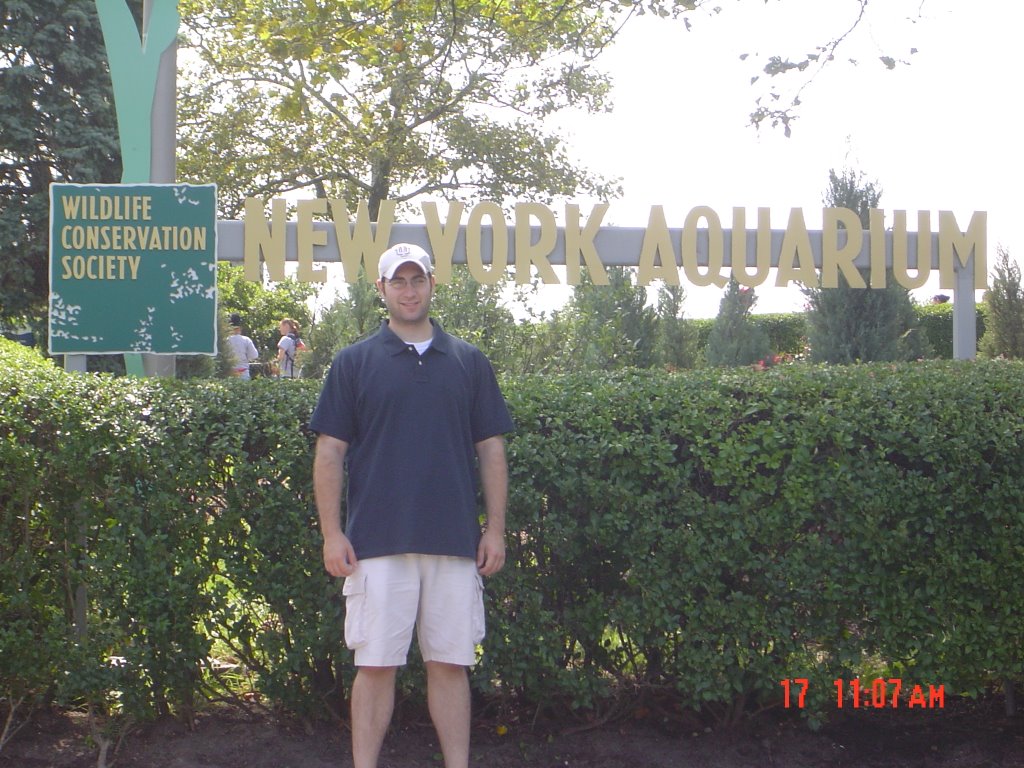
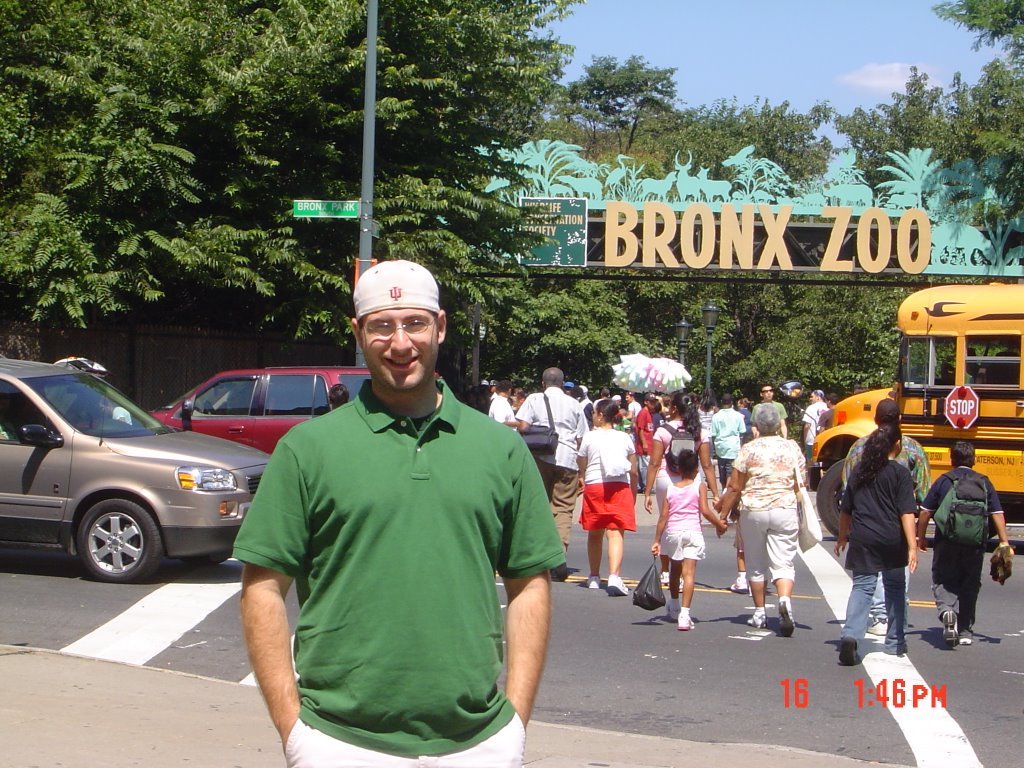
Anyways, last week, and a little bit of this week, I visited the Bronx Zoo for the first time, the New York Aquarium for the first time, and a brief view of the Brooklyn Botanic Garden for the first time. I also went to check out the Brooklyn Museum, though it was primarily art stuff, which interests me not. It was nice as it was almost like being a tourist, except that I didn't have to pay to travel to another city, nor stay at a hotel. How often does one check out attractions in their own city? One thing which kept striking me at the zoo and the aquarium was that a lot of the signs were describing the dwindling populations of this or that animal and how their habitats were being destroyed by humans. Now, of course, what should strike one is that these institutions are really trying to push their message that the world is going down the drain and it is our fault, but we need to help out. Howe
 ver, inasmuch as they were trying to stuff this message down the visitors' throats, they are right and, moreover, this is the place where the message needs to be made. For if it were not being made as strong as that, where else would the message be as understood. I was feeling rather helpless as to what I could do to combat this utter evil that has taken hold over our planet, destroying it, and within our midst. Simply, I saw that they were really pushing the Wildlife Conservation Society, which was working to try helping out fauna on our earth, so I joined up. Granted, I also get free passage to the four zoos in the New York City area and the aquarium, plus discounts, etc.
Anyways, I'm back now to blogging and it was a nice time. School starts up Monday....
13 August 2006
Returning From Boston back to New York City
The Summer Beit Midrash program that began 4 July ended Thursday. It was a different day than usual, as we went to the Boston Beis Din (sorry, I don't know of any web links for this place), which was neat, as we got to see parts of a few גיטין (gets) given (I had never seen it done before). In addition to watching the proceedings, we also finished up looking over some of our תשובות (responsa) on the שאלה (query) that we were given on our topic.
Afterwards, I headed back to my hosts' house, where I packed up and left, heading to the bus terminal, picking up a 10.30 bus and arriving back to the City at 3am. I was around for shabbas, with a great number of inquiries as to my absence and I confirmed that I was back in town from having been away. Also, I got to meet a fellow JBlogger over shabbas, which is always pretty neat.
At some point, I hope to post both the query and my responsum soon.
Afterwards, I headed back to my hosts' house, where I packed up and left, heading to the bus terminal, picking up a 10.30 bus and arriving back to the City at 3am. I was around for shabbas, with a great number of inquiries as to my absence and I confirmed that I was back in town from having been away. Also, I got to meet a fellow JBlogger over shabbas, which is always pretty neat.
At some point, I hope to post both the query and my responsum soon.
09 August 2006
Lecture on the Meiri - Last Public Lecture of this Year's SBM
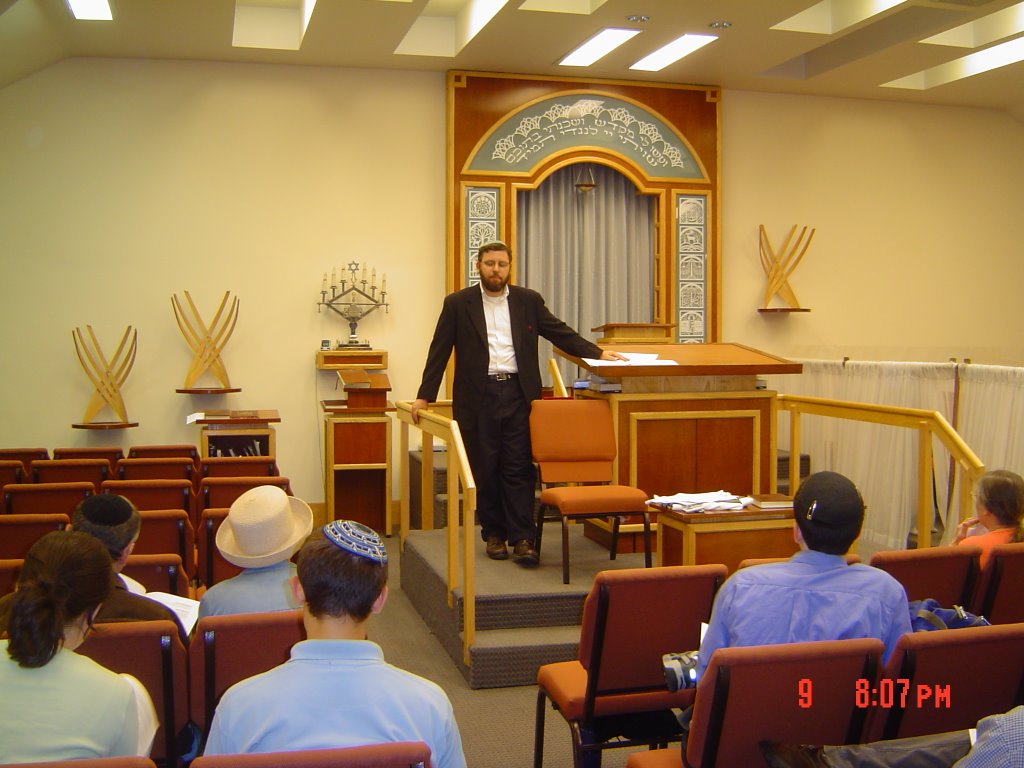 Tonight, Rabbi Klapper spoke on the topic of "Paskening like the Meiri" to round out the public lecture series during this year's Summer Beit Midrash program in the Boston area. I had been thinking of trying to quote this piece or that piece, but it was not only overwhelming of the choices from which I could have chose, but that it also would have been tremendously time consuming. So, I highly encourage you to listen to it as it is tremendously informative about paskening like Rabbi Menahem Meiri. Additionally, he also showed briefly how he disagreed with Dr. Moshe Halbertal's article in the first Edah journal.
Subscribe to:
Posts (Atom)